I've tried a number of different approaches for building out different aspects of the human structures of the town. From this process I've gradually picked up what works best for me when it comes to different types of construction. Shapes and geometries that recur or repeat are candidates for some degree of automation. Once the time cost of automating certain construction steps is cleared then the tools present huge time saves when it comes to not only initial construction, but edits down the line.
With the example of Fences / walls, these are ubiquitous and numerous in almost all towns across the world, so developing tools to speed up their layout is essential.
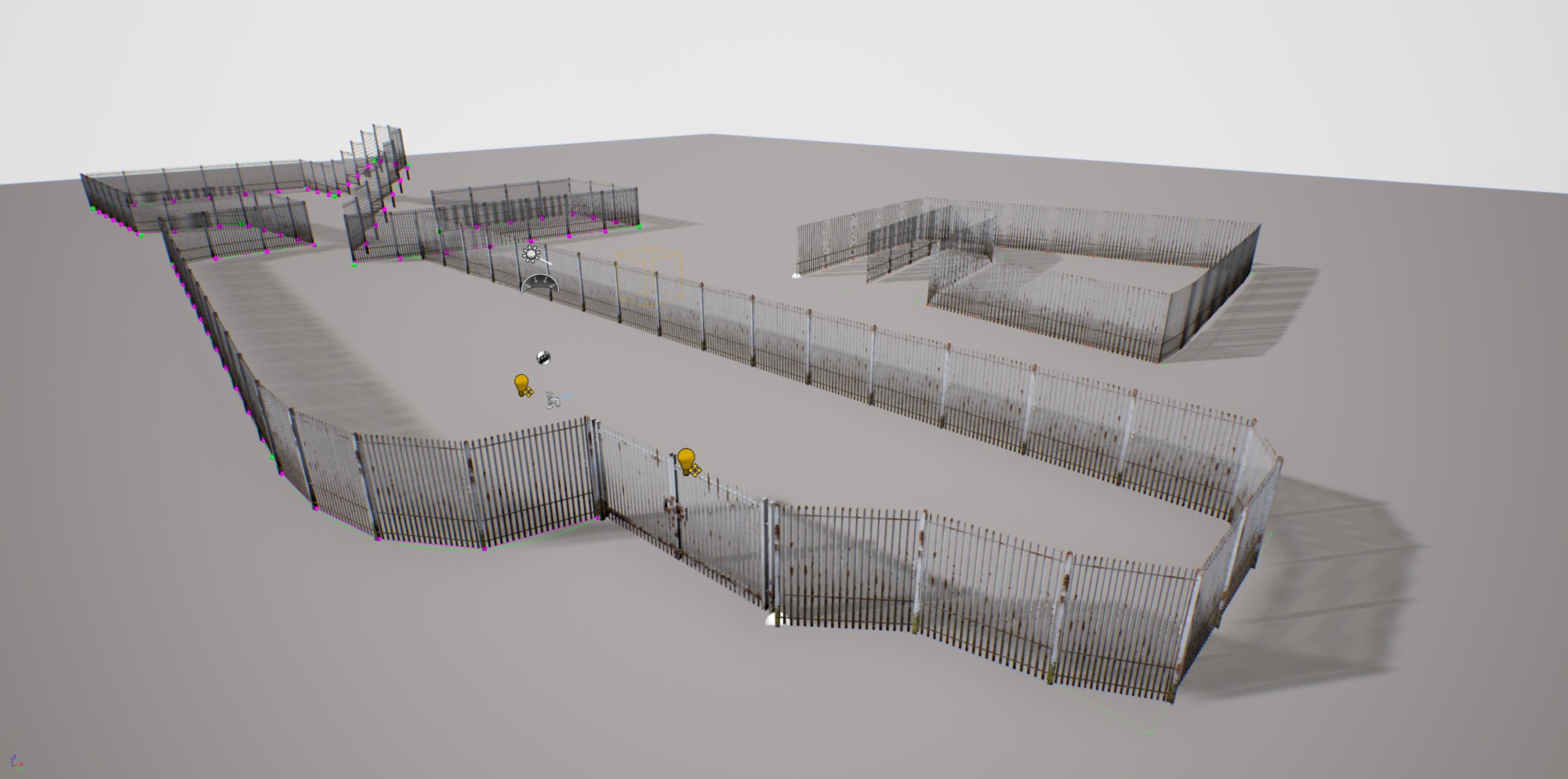
Spline tool for laying out Palisade fencing (amongst others), palisade columns and sections do not orientate to the normal of the ground.
I have a lot of roofs to build out for my current project and found placing endless angled modular parts a chore + they wouldn't lead to much variety. In response I've developed this roof builder blueprint that places static meshes based on a set of splines that are easy to manipulate. It allows for the choice of materials and a simple set of roof characteristics. Took about a day to program, but will save hundreds of hours in the long run. Thinking of making it my first entry onto the marketplace, as I don't see anybody offering a similar solution. UE4 now allows for the merging of static meshes from blueprints so it's easy to optimise the finished result into a single SM once you're happy.
Simple Blueprint system that fills a given area with unscaled meshes; filling smaller areas with gradually smaller meshes as needed This means the lightmaps are not stretched and you can achieve perfect light bakes with very low res lightmaps. The whole building is made from smaller modular parts meaning I'm able to bake this entire scene (multiple rooms) in around 15 seconds. My aim with these tools is to take the pain out of modular construction and light baking - which usually involves manually placing individual parts and scaling their lightmaps accordingly, one by one. The whole building can be merged to form a single mesh and draw call once completed.
Another tool to ease modular construction and avoid hand placing repetitive parts. The blueprint evenly spaces out meshes along a spine, making sure to only contract to fill space and not stretch. This version is using the same skirting mesh for all three strips, but different meshes and materials for each be selected. Corner pieces are added where the spline encounters an outwards facing corner. Lightmaps are kept at a regular size and density.
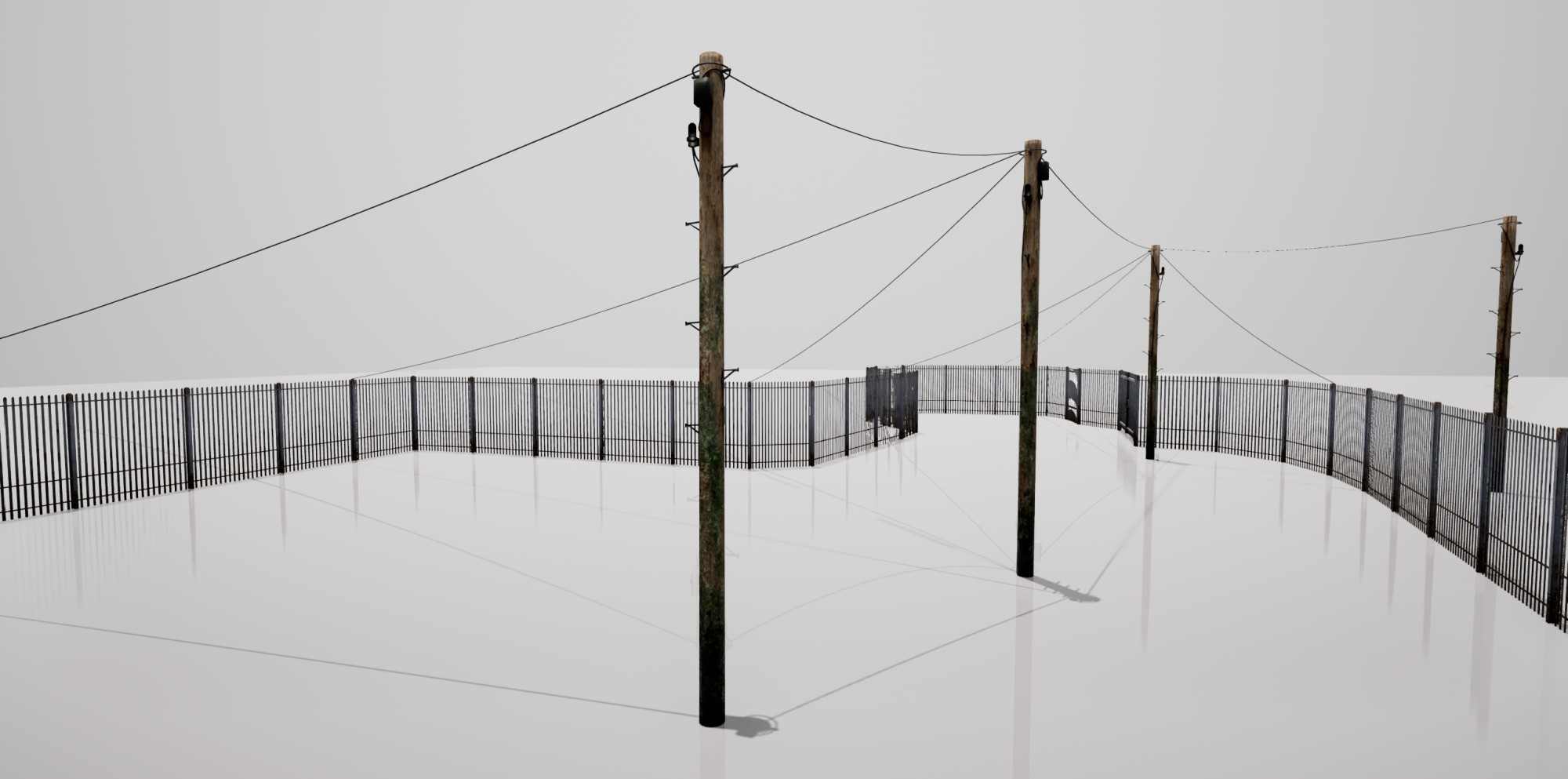
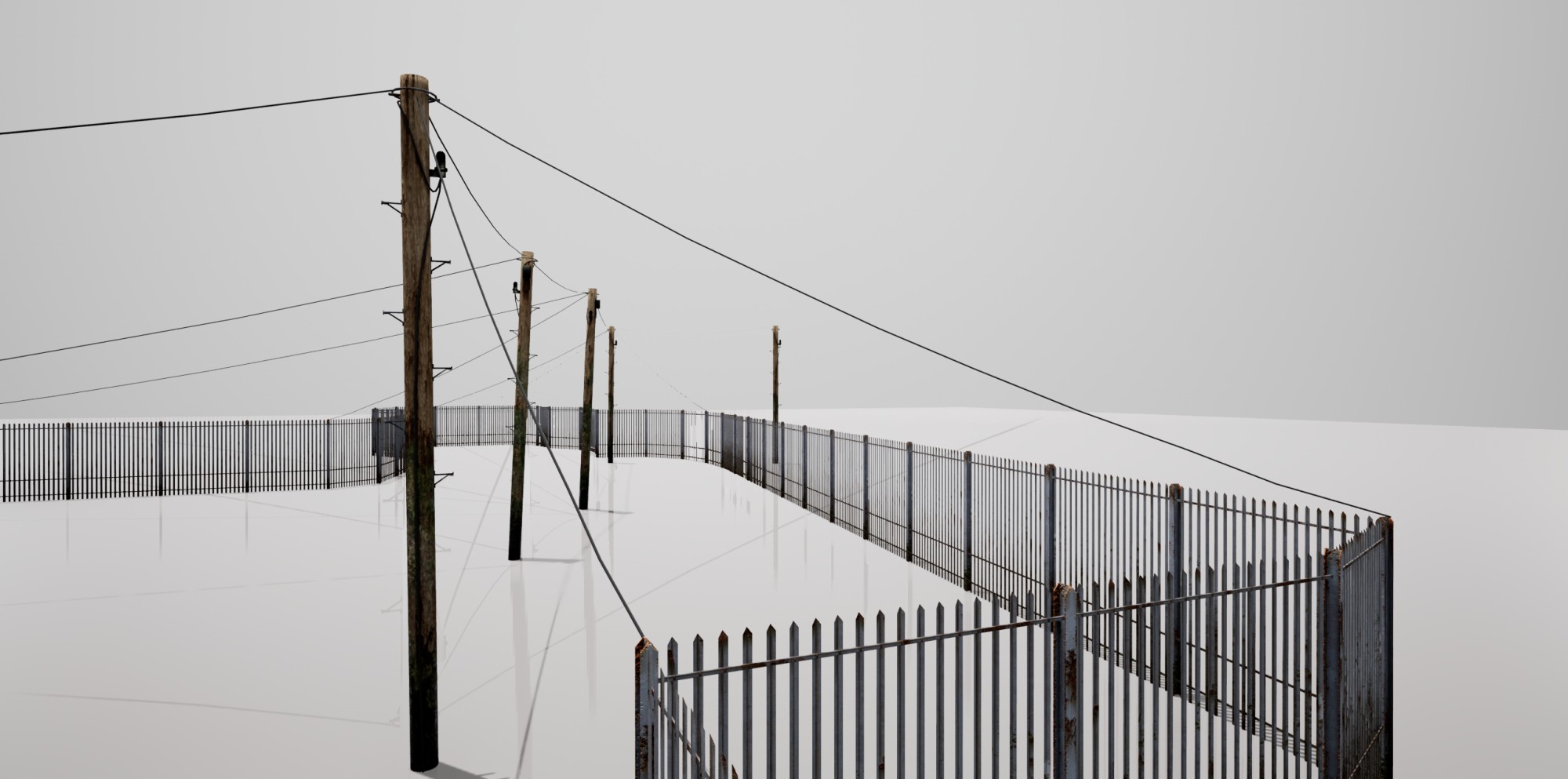
These telegraph poles allow for up to 12 physics driven wires to be drawn from them. These sway in the wind and will react to collision. Physics is disabled at a certain distance